Ethiopia, one of Africa’s oldest nations, boasts a political history as rich and complex as its diverse cultures. Its current political structure—an intriguing blend of federalism, ethnic representation, parliamentary democracy, and centuries-old traditions—stands out on the continent. In this article, we’ll unpack the political organization of Ethiopia, explore how it has evolved, and provide a clear understanding of the country’s unique governance model. Whether you’re a student, policy enthusiast, or simply curious about Ethiopian affairs, this detailed overview will provide the clarity you need.
The Foundations of Ethiopian Federalism
Ethiopia’s modern political structure is built on a federal system, established by the 1995 Constitution. Unlike many African states, Ethiopia’s federalism is explicitly based on ethnicity. The country is divided into 11 regional states (kililoch, singular kilil) and two chartered cities—Addis Ababa and Dire Dawa. Each region is largely defined by the dominant ethnic group residing there, such as Oromia for the Oromo people and Tigray for the Tigrayan people.
This federal arrangement was designed to address Ethiopia’s vast ethnic diversity—over 80 distinct groups—and to grant self-determination and autonomy to regions. Each state has its own constitution, government, and official language(s), and holds significant authority over local matters, including education, policing, and economic development.
A unique feature of Ethiopian federalism is the right of each state to secede from the federation, a clause rarely found elsewhere. While intended to assure ethnic groups of their autonomy, it has also been a source of tension and debate, especially during periods of political crisis.
Parliamentary System and the Structure of Government
Ethiopia is a parliamentary republic, with a clear division between the executive, legislative, and judicial branches. The head of state is the President, but this role is largely ceremonial. The true executive power rests with the Prime Minister, who is the head of government.
The legislative branch is bicameral, consisting of the House of Peoples' Representatives (HoPR) and the House of Federation (HoF):
- House of Peoples' Representatives (HoPR): The lower house, with 547 members elected for five-year terms. Seats are allocated based on population, with at least 20 seats reserved for minority nationalities and peoples. The HoPR is responsible for passing laws, approving the budget, and overseeing the executive. - House of Federation (HoF): The upper house, with 153 members selected by regional councils. Its primary role is to interpret the constitution and resolve disputes between states, particularly those related to ethnic or regional issues.The Prime Minister, chosen from the party with a majority in the HoPR, wields significant authority, including appointing ministers and directing national policy. Since 2018, Abiy Ahmed has served as Prime Minister, initiating political and economic reforms that have reshaped Ethiopia’s internal and external relations.
Regional Autonomy and Ethnic Representation
Ethiopia’s ethnic federalism is both its strength and its greatest challenge. Each region enjoys broad autonomy but must also navigate complex inter-ethnic relations. Regional governments have their own presidents, parliaments, and security forces. For example, the Oromia region, home to over 35% of Ethiopia’s population, manages its own police and educational systems in the Oromo language.
However, ethnic federalism has sometimes fueled competition and conflict. Disputes over boundaries, resources, and representation have led to violent clashes, especially in border areas like the Somali and Afar regions. The 2020 conflict in Tigray highlighted the fragility of regional-state relations and raised questions about the sustainability of this federal model.
Despite these challenges, Ethiopia’s structure has enabled many ethnic groups to preserve their languages and cultures within the framework of a unified state. Regional parliaments often legislate in local languages, and traditional leaders are sometimes integrated into governance.
Political Parties and Electoral System
Ethiopia’s political landscape has been shaped by both historical legacies and recent reforms. For much of the past three decades, the Ethiopian People's Revolutionary Democratic Front (EPRDF) dominated politics. The EPRDF was a coalition of ethnic-based parties, including the Tigray People’s Liberation Front (TPLF) and the Oromo People’s Democratic Organization (OPDO).
In 2019, Prime Minister Abiy Ahmed merged the EPRDF into the new Prosperity Party (PP), aiming to transcend ethnic politics and promote national unity. The PP is now the ruling party, but opposition groups, both ethnic and national, remain active.
Ethiopia uses a first-past-the-post (FPTP) voting system for the HoPR, with elections held every five years. The most recent general election, in June 2021, was the largest in Ethiopia’s history, with over 37 million registered voters, but was marred by delays and insecurity in some regions.
| Feature | Ethiopia | Nigeria | South Africa |
|---|---|---|---|
| Federal Structure | Ethnic-based, 11 states | Geographic-based, 36 states | Geographic-based, 9 provinces |
| Official Languages | Amharic (federal), regional languages | English (federal), 500+ local languages | 11 official languages |
| Head of Government | Prime Minister | President | President |
| Legislature | Bicameral (HoPR, HoF) | Bicameral (Senate, House of Representatives) | Bicameral (National Assembly, National Council of Provinces) |
| Secession Clause | Yes (in Constitution) | No | No |
The Judiciary and Constitutional Interpretation
Ethiopia’s judiciary is formally independent and structured in three tiers: federal courts, regional courts, and local courts. At the federal level, the Supreme Court is the highest judicial body, responsible for interpreting federal laws and hearing appeals.
A distinctive feature of Ethiopia’s constitutional order is the role of the House of Federation (HoF) in constitutional interpretation. Unlike many countries where constitutional courts handle such matters, Ethiopia assigns this critical function to the HoF, a political body. When constitutional disputes arise, the Council of Constitutional Inquiry (CCI)—a group of legal experts and judges—investigates and makes recommendations, but the HoF makes the final decision.
This arrangement reflects Ethiopia’s effort to balance legal expertise with political representation, but it has also led to concerns about the politicization of constitutional matters, particularly during times of crisis.
Traditional Governance and Customary Law
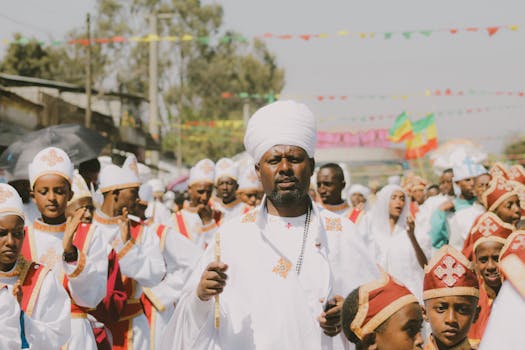
Despite the formal structures of modern government, traditional institutions retain significant influence in Ethiopian society. Customary law, elders’ councils, and religious leaders often play key roles in conflict resolution, land management, and community governance, especially in rural areas.
For instance, the Gadaa system of the Oromo people is a centuries-old democratic institution that organizes society into age sets and oversees political, social, and legal affairs. Similarly, the “Shimglina” (council of elders) among the Amhara and Tigrayans mediates disputes and enforces customary norms.
The Ethiopian Constitution recognizes the importance of such systems, granting them a degree of legal standing, particularly in matters of family law and inheritance. This coexistence of formal and informal governance highlights the adaptability and resilience of Ethiopia’s political structure.
Challenges and Prospects for Ethiopia’s Political Future
While Ethiopia’s political structure is designed to accommodate diversity and foster stability, it faces significant hurdles. Ethnic tensions, competition for resources, and demands for greater autonomy or self-determination continue to test the federation’s cohesion. The recent Tigray conflict, as well as unrest in Oromia and other regions, underscores the fragile balance between unity and autonomy.
Nevertheless, Ethiopia has made remarkable progress in building democratic institutions, expanding political participation, and promoting economic development. According to the World Bank, Ethiopia’s GDP grew by an average of 9.4% annually between 2010 and 2019, making it one of Africa’s fastest-growing economies. The challenge for the years ahead will be translating this economic momentum into lasting political stability and inclusive governance.
Efforts at electoral reform, dialogue among political actors, and a renewed commitment to rule of law will be critical. The success or failure of Ethiopia’s unique federal experiment will have implications not just for its 120 million citizens, but for federalism and ethnic politics across Africa.
Understanding Ethiopia’s Political Structure: Key Takeaways
Ethiopia’s political structure is a fascinating blend of federalism, ethnic representation, parliamentary democracy, and tradition. It is unique in its explicit recognition of ethnic diversity and its bold constitutional experiment with regional autonomy and even the right to secession. The system has enabled greater inclusion of Ethiopia’s many peoples, but has also generated new challenges, particularly around ethnic conflict and political representation.
As Ethiopia navigates a rapidly changing political landscape, understanding its complex governance system is essential for anyone interested in African politics, development, or international relations.