Ethiopian Festivals and Their Cultural Significance: Living Traditions Through Time
Ethiopia, one of the oldest nations in the world, is a land of vibrant traditions and a rich tapestry of cultures. The country’s calendar is punctuated by unique festivals that not only mark religious and historical events but also showcase the enduring spirit of its people. From the highlands of Lalibela to the heart of Addis Ababa, Ethiopian festivals are living expressions of identity, faith, and community. These celebrations bridge past and present, uniting millions in communal joy, reverence, and remembrance.
In this article, we explore the most important Ethiopian festivals, their origins, and their deep-rooted cultural significance. Whether religious or secular, these festivals offer a window into Ethiopia’s soul, revealing how ancient traditions continue to shape daily life and national unity in the 21st century.
The Ethiopian Calendar: A Foundation for Festivity
Ethiopia follows its own unique calendar, which differs from the widely used Gregorian system. The Ethiopian calendar is based on the ancient Coptic calendar and consists of 13 months—12 months of 30 days each and a 13th month called Pagumē, which has 5 or 6 days depending on leap years. The Ethiopian year is roughly seven to eight years behind the Gregorian year.

This distinct calendar shapes the timing of major festivals. For example, Ethiopian New Year (Enkutatash) falls in September, and Christmas (Genna) is celebrated on January 7 (Tahisas 29 in the Ethiopian calendar). Because of this, visitors might be surprised to find festive seasons occurring at different times than in other parts of the world.
Religious Festivals: Faith and Communal Identity
Religion is woven into the fabric of Ethiopian society, with the majority of the population adhering to Ethiopian Orthodox Christianity, followed by Islam and Protestantism. Religious festivals serve as focal points for devotion, reflection, and community gathering.
Genna (Ethiopian Christmas) Celebrated on January 7, Genna marks the birth of Jesus Christ according to the Julian calendar used by the Ethiopian Orthodox Church. The festival begins with a solemn church service that can last several hours, followed by processions, traditional music, and the playing of a unique sport also called genna, similar to hockey. In rural areas, communities come together for communal meals, featuring traditional dishes like doro wat (spicy chicken stew) and injera.
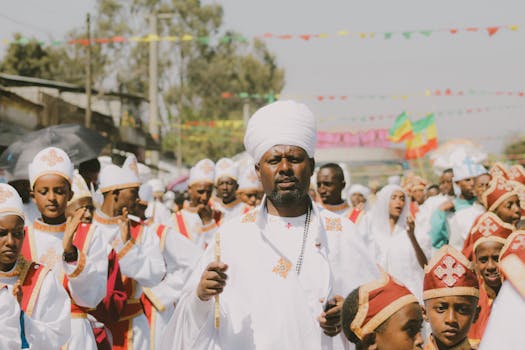
Timkat (Epiphany) Timkat, held on January 19 (or 20 in a leap year), commemorates the baptism of Jesus in the River Jordan. It is one of Ethiopia’s most spectacular festivals, drawing thousands of locals and tourists alike. The highlight is the procession of the Tabot (replica of the Ark of the Covenant) from churches to nearby bodies of water. Celebrations include colorful parades, chanting, and mass baptisms, symbolizing spiritual renewal and communal unity.
Eid al-Fitr and Eid al-Adha For Ethiopia’s significant Muslim population, Eid al-Fitr (marking the end of Ramadan) and Eid al-Adha (the Festival of Sacrifice) are major events. Large prayers are held at mosques, followed by feasting, charity, and visiting relatives. In cities like Harar and Dire Dawa, these festivals also feature traditional dances and communal meals.
Historical and Secular Festivals: Honoring Heritage and Unity
While religious festivals are central, Ethiopia also celebrates events tied to its unique history, national identity, and agricultural cycles.
Enkutatash (Ethiopian New Year) Enkutatash, meaning “gift of jewels,” is celebrated on September 11 (or 12 in a leap year). It marks the end of the rainy season and the beginning of a new year. The festival is rooted in both ancient pagan harvest festivals and the biblical return of the Queen of Sheba to Ethiopia. Today, it is celebrated with family gatherings, singing, and the exchange of flowers and small gifts, especially among children.
Meskel (Finding of the True Cross) Held on September 27, Meskel commemorates the discovery of the True Cross by Empress Helena in the 4th century. The festival is famous for its Demera bonfire—a towering structure of wood and flowers set ablaze in city squares and churchyards. The lighting of the bonfire, accompanied by singing and dancing, symbolizes the light of faith and the triumph of good over evil. In 2013, UNESCO recognized Meskel as an Intangible Cultural Heritage of Humanity.
Irreecha (Thanksgiving of the Oromo People) Irreecha is an annual thanksgiving festival celebrated by the Oromo, Ethiopia’s largest ethnic group. Held at the end of the rainy season (usually late September or early October), it is a time to express gratitude to Waaqa (God) for blessings and abundant harvest. Thousands gather at the shores of Lake Hora in Bishoftu, carrying fresh grasses and flowers as offerings. The festival strengthens Oromo identity and promotes peace and reconciliation.
Regional Diversity in Ethiopian Festival Traditions
Ethiopia is home to over 80 ethnic groups, each with its own traditions and local festivals. While national celebrations unite the country, regional festivals highlight Ethiopia’s incredible cultural diversity.
Fichee Chambalaalla Celebrated by the Sidama people in southern Ethiopia, Fichee Chambalaalla is a New Year festival that marks the end of one year and the beginning of another, usually in January. It is a time for social reconciliation, communal feasting, and sharing traditional foods such as buurisame (a mixture of false banana and butter). In 2015, UNESCO added Fichee Chambalaalla to its Representative List of the Intangible Cultural Heritage of Humanity.
Shadey The Konso people in the south celebrate Shadey, a biennial festival dedicated to ancestral spirits and community wellbeing. The festival features elaborate processions, masked dances, and the construction of waga (wooden statues) to honor the departed. Shadey strengthens social bonds and preserves the unique traditions of the Konso, who are themselves recognized by UNESCO for their terraced landscapes and cultural practices.
Gadaa Ceremonies Among the Oromo, the Gadaa system of governance is celebrated through a series of rituals and festivals that mark the transfer of power and societal roles every eight years. These ceremonies combine politics, religion, and culture, ensuring the transmission of values and history across generations.
Comparing Major Ethiopian Festivals
To better understand the scope, timing, and cultural significance of Ethiopian festivals, here is a comparative overview of some of the most important celebrations:
| Festival | Date (Gregorian) | Religion/Ethnic Group | Main Activities | Cultural Significance |
|---|---|---|---|---|
| Genna (Christmas) | January 7 | Christian (Orthodox) | Church services, feasting, genna sport | Marks the birth of Christ, community unity |
| Timkat (Epiphany) | January 19/20 | Christian (Orthodox) | Procession of Tabot, mass baptisms | Spiritual renewal, national pride |
| Enkutatash (New Year) | September 11/12 | All Ethiopians | Family gatherings, gift exchange | Renewal, hope, harvest celebration |
| Meskel | September 27 | Christian (Orthodox) | Demera bonfire, singing, dancing | Faith, victory of good over evil |
| Irreecha | Late September/Early October | Oromo | Thanksgiving rituals, offerings at lake | Gratitude, identity, reconciliation |
| Fichee Chambalaalla | January (variable) | Sidama | Feasting, sharing food, reconciliation | New Year, cultural continuity |
| Eid al-Fitr/Eid al-Adha | Variable (Islamic lunar calendar) | Muslim | Prayers, feasting, charity | Spiritual reflection, community support |
The Role of Festivals in Ethiopian Social Life
Ethiopian festivals are more than just holidays; they are deeply embedded in the nation’s social fabric. These celebrations foster a sense of belonging, reinforce collective memory, and provide a channel for passing down values and traditions. For many Ethiopians, festivals are the highlight of the year, anticipated with excitement and prepared for with weeks of effort.
Social Cohesion and Identity Festivals serve as crucial moments for reinforcing social bonds. In rural areas, preparations involve entire communities, from brewing tella (traditional beer) to preparing banquets. When families gather, it is not uncommon for distant relatives and neighbors to join, strengthening extended kinship networks.
Transmission of Culture Many rituals, songs, and dances performed during festivals are centuries old. Through active participation, the young learn about their heritage, language, and social responsibilities. For instance, the Demera bonfire of Meskel is often constructed by young people, symbolizing the passing of tradition from elders to the next generation.
Economic and Tourism Impact Festivals also have a measurable economic impact. Timkat, for example, attracts over 100,000 tourists annually, contributing millions of dollars in revenue to the local economy. Artisan markets, traditional clothing, and food stalls thrive during festival seasons, providing livelihoods and promoting Ethiopia’s rich cultural exports.
Modern Challenges and the Future of Ethiopian Festivals
While Ethiopian festivals remain robust, they are not immune to modern pressures. Urbanization, migration, and global influences have introduced new customs and sometimes diluted traditional practices. Political tensions have, at times, impacted the safe conduct of large gatherings.
However, there are significant efforts to preserve and revitalize these traditions. Government initiatives, UNESCO recognition, and community-driven projects work to document and safeguard intangible heritage. Ethiopian diaspora communities abroad also keep festivals alive, adapting celebrations to new contexts while maintaining core values.
In recent years, digital technology and social media have played a role in sharing festival experiences globally. Live streams of Timkat or Meskel allow millions who cannot attend in person to participate virtually, ensuring that these traditions continue to evolve and thrive.
Celebrating Ethiopia’s Living Heritage
Ethiopian festivals are vibrant testaments to the nation’s enduring traditions, unity, and diversity. Whether religious or secular, national or regional, these celebrations offer insight into the heart of Ethiopian society. They are moments when the past and present merge, communities unite, and identities are affirmed.
As Ethiopia continues to navigate change, its festivals remain pillars of cultural resilience—reminding all Ethiopians, at home and abroad, of the importance of heritage, faith, and togetherness.