The Unique Culture of the Oromo People in Ethiopia: Traditions, Language, and Identity
The Oromo people, the largest ethnic group in Ethiopia, have a vibrant and deeply rooted culture that has shaped the social and historical landscape of the Horn of Africa for centuries. With an estimated population of over 40 million, the Oromo represent about 35% of Ethiopia’s total population, making their language, traditions, and worldview highly influential across the region. Though the Oromo have often been overlooked in mainstream narratives, their unique cultural identity, social systems, and resilience continue to offer valuable insights into Ethiopia’s diverse heritage.
This article explores the core aspects of Oromo culture, from their indigenous democratic system and linguistic legacy to their colorful festivals and modern-day challenges. Whether you’re a history enthusiast, a traveler, or simply curious about Ethiopia’s mosaic of peoples, understanding the Oromo’s unique culture is essential to appreciating the country’s rich tapestry.
The Gadaa System: Indigenous Democracy and Social Organization
One of the most distinctive features of Oromo culture is the Gadaa system, a traditional, age-based socio-political structure that has governed Oromo society for centuries. Recognized by UNESCO in 2016 as an Intangible Cultural Heritage of Humanity, the Gadaa system is a testament to the Oromo’s sophisticated approach to governance and social harmony.
The Gadaa system divides society into age sets or “luba,” with leadership rotating every eight years. Each luba cohort moves through a series of ranks and responsibilities, culminating in the election of a Gadaa leader, known as the Abba Gadaa. Unlike hereditary monarchies, leadership in the Gadaa system is based on merit, consensus, and collective decision-making.
Key features of the Gadaa system include:
- Egalitarianism: All adult males have the opportunity to participate and lead, regardless of lineage. - Conflict Resolution: Community disputes are resolved through councils and consensus, reducing the risk of violence. - Women’s Influence: While leadership roles are male-dominated, women play critical roles as advisors and custodians of tradition.The Gadaa system has inspired democratic movements across Africa, offering a model of governance rooted in inclusivity and dialogue. Its resilience, even in the face of modern political pressures, highlights the Oromo’s commitment to communal values and justice.
Oromo Language and Oral Tradition: Afan Oromo as a Cultural Pillar
Language plays a central role in the identity of the Oromo people. Afan Oromo, their native tongue, is the most widely spoken Cushitic language in Africa and the third most spoken language in Ethiopia after Amharic and Tigrinya. With over 35 million native speakers, Afan Oromo is not only a means of communication but also a vehicle for preserving folklore, history, and collective memory.
Oral tradition occupies a special place in Oromo society. Storytelling, proverbs, and songs are fundamental tools for transmitting values, teaching history, and reinforcing communal bonds. For example, the “geerarsa” is a form of oral poetry used to express heroism, resistance, or social critique. These oral forms have played a crucial role in maintaining Oromo identity, especially during periods when the language faced suppression by successive Ethiopian regimes.
Recent advancements have seen Afan Oromo gain greater recognition:
- In 1991, following Ethiopia’s transition to a federal system, Afan Oromo was adopted as an official language in the Oromia region. - In 2020, Afan Oromo was included as one of Ethiopia’s working languages at the federal level. - Oromo literature, newspapers, and radio stations have flourished, contributing to a cultural renaissance.The preservation and promotion of Afan Oromo are central to the community’s efforts to assert their presence and heritage within the broader Ethiopian landscape.
Traditional Clothing, Music, and Dance: Expressions of Oromo Identity
Oromo cultural expressions are vividly reflected in their clothing, music, and dance, all of which play crucial roles in everyday life and special occasions.
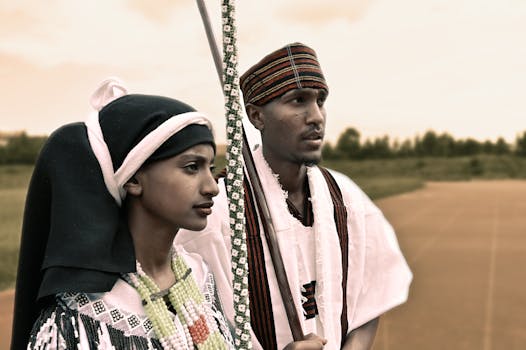
Traditional Oromo attire varies across regions but often features hand-woven cotton garments called “woya.” For men, this includes a wraparound cloth and a “shash” (turban), while women wear colorful dresses adorned with beadwork and jewelry. These outfits are not just functional but symbolic, indicating marital status, social rank, or regional affiliation.
Music and dance are integral to Oromo ceremonies and festivals. The “shagoyee” is a famous Oromo dance, characterized by synchronized movements and communal participation. Instruments such as the “krar” (lyre) and “cabbal” (drum) accompany songs that celebrate love, harvests, or heroes. These artistic traditions serve as both entertainment and a means of passing down history and values.
Oromo festivals are lively and inclusive, with the most notable being:
- Irreecha: An annual thanksgiving festival held at the end of the rainy season, where people gather to honor Waaqa (God) and give thanks for nature’s bounty. - Ateetee: A women’s fertility rite, combining prayers, music, and rituals to bless the land and community.Through these vibrant cultural practices, the Oromo continue to reinforce their collective identity and resilience.
Beliefs, Religion, and the Concept of Waaqa
Spirituality is a cornerstone of Oromo culture. Traditionally, the Oromo practiced a monotheistic belief system centered on Waaqa, the supreme creator. This indigenous faith, often referred to as “Waaqeffannaa,” emphasizes the interconnectedness of humanity, nature, and the divine.
Key beliefs in Waaqeffannaa include:
- Waaqa as the all-powerful, omnipresent, and benevolent deity. - Respect for ancestors and the natural world as extensions of Waaqa’s creation. - Rituals and prayers focused on harmony, fertility, and communal well-being.Over time, the Oromo have adopted Christianity and Islam, resulting in a mosaic of religious practices. Today, it is estimated that around 48% of Oromo are Muslim, 30% are Ethiopian Orthodox Christians, and 17% practice Protestant Christianity, with a small percentage adhering to traditional beliefs.
Despite these changes, elements of Waaqeffannaa persist in Oromo rituals and festivals, fostering a sense of unity and continuity.
Oromo Cultural Festivals: Celebrating Heritage and Community
Festivals are an essential aspect of the Oromo way of life, serving as moments of communal bonding, spiritual renewal, and cultural affirmation.
Irreecha is arguably the most significant Oromo festival, drawing crowds of over 4 million people to the shores of Lake Hora Arsadi in Bishoftu each year. Participants dress in traditional attire, sing, dance, and offer green grass and flowers to the water as a symbol of gratitude to Waaqa. This celebration marks the transition from the rainy season to the dry season, signifying hope and renewal.
Other notable festivals include:
- Siqqee: A women’s festival promoting social justice, gender equality, and community solidarity. - Dhibaayyuu: Celebrations marking the Gadaa transition every eight years, with elaborate rituals and feasts.These festivals not only strengthen social bonds but also serve as platforms for intergenerational learning and the preservation of Oromo identity.
Comparing Oromo Culture with Neighboring Ethnic Groups
Ethiopia is home to more than 80 ethnic groups, each with distinct cultural practices. The table below highlights some key differences and similarities between the Oromo and two other major groups: the Amhara and Somali.
| Aspect | Oromo | Amhara | Somali |
|---|---|---|---|
| Population (est.) | 40+ million | 27 million | 7 million |
| Language | Afan Oromo (Cushitic) | Amharic (Semitic) | Af-Soomaali (Cushitic) |
| Main Religion | Islam, Christianity, Waaqeffannaa | Christianity (Orthodox) | Islam |
| Traditional Attire | Woya, shash, beadwork | Gabbi, netela, kemis | Macawis, dirac, headscarves |
| Major Festival | Irreecha | Timkat (Epiphany) | Eid al-Fitr |
| Traditional Governance | Gadaa system | Feudal monarchy | Clan-based councils |
This comparison highlights the Oromo’s unique cultural markers—particularly the Gadaa system and Irreecha festival—while also showing the shared threads of language and faith that connect Ethiopia’s peoples.
Modern Challenges and the Preservation of Oromo Culture
Despite its rich heritage, Oromo culture faces numerous challenges in the modern era. Political marginalization, urbanization, and globalization threaten the survival of traditional practices and languages. Between 1974 and 1991, during the Derg regime, cultural expressions in Afan Oromo were heavily restricted, leading to a decline in traditional knowledge transmission.
Today, efforts to preserve and promote Oromo culture include:
- The establishment of cultural centers and museums in Addis Ababa, Jimma, and other cities. - The integration of Gadaa principles into civic education. - The use of digital media to document and share oral histories, music, and festivals.International recognition, such as UNESCO’s listing of the Gadaa system, has also galvanized community efforts to safeguard intangible heritage. As Ethiopia continues to evolve, the Oromo’s commitment to cultural preservation remains a powerful example of resilience and pride.
Final Reflections on the Unique Culture of the Oromo People
The Oromo people’s unique culture is a testament to the diversity and dynamism of Ethiopia’s social fabric. From the democratic ideals of the Gadaa system to the poetic richness of Afan Oromo and the vibrant celebrations of Irreecha, the Oromo have contributed immeasurably to the region’s heritage. As they navigate the challenges of modernity, their traditions and values continue to inspire movements for justice, unity, and cultural pride.
Understanding and celebrating the Oromo’s distinct culture not only enriches our appreciation of Ethiopia but also highlights the importance of preserving indigenous knowledge in a rapidly changing world.