Ethiopia, often called the “water tower of East Africa,” is a nation whose economy and livelihoods are deeply tied to the land. With nearly 80% of its population employed in agriculture, the sector is not just an economic pillar but also a foundation of everyday life and culture. However, Ethiopia’s agricultural productivity and food security are increasingly threatened by climate change, a challenge that is reshaping rural communities, national policies, and the future of millions. In this article, we will explore the far-reaching impact of climate change on Ethiopian agriculture, investigating changes in rainfall, the spread of pests, adaptation strategies, and the critical choices facing farmers and policymakers.
Climate Change and the Shifting Rainfall Patterns in Ethiopia
Rainfall patterns in Ethiopia are inherently complex due to the country’s diverse topography, but recent decades have brought even greater unpredictability. According to the Ethiopian Meteorological Institute, over the past 50 years, the country has experienced a significant increase in the frequency and intensity of both droughts and floods. The Intergovernmental Panel on Climate Change (IPCC) reports that average annual temperatures in Ethiopia have risen by 1.3°C since the 1960s, and projections suggest further increases of 1.5–3.1°C by 2050.
These temperature changes are altering the seasonal onset, duration, and distribution of rainfall. Ethiopia’s two main rainy seasons—Belg (February to May) and Kiremt (June to September)—are now less reliable. For example, the 2015–2016 El Niño event led to the worst drought in 30 years, affecting over 10 million people and causing crop failures across the country.

Farmers in regions like Tigray and Oromia have reported that rains now often arrive late or end early, shortening the growing season and reducing yields. Such unpredictability makes traditional farming calendars obsolete, forcing farmers to adapt with limited resources.
Drought, Flood, and Their Consequences on Yields
Ethiopia has long been vulnerable to both drought and flood, but climate change is amplifying these extremes. The United Nations Office for the Coordination of Humanitarian Affairs (OCHA) estimates that between 2000 and 2020, Ethiopia experienced 13 major droughts and at least 10 significant flood events that affected agricultural production.
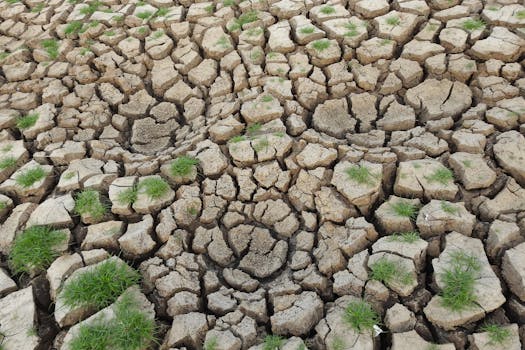
Droughts are particularly devastating as they lead to widespread crop failure. Maize, teff, wheat, and sorghum—the country’s staple grains—are highly sensitive to water stress during germination and flowering stages. For instance, the 2011 drought in the Horn of Africa reduced cereal yields by up to 50% in the most affected regions. Livestock, another cornerstone of Ethiopian agriculture, also suffer; millions of cattle, goats, and sheep can perish in a single season due to lack of water and pasture.
Conversely, flash floods can wash away topsoil and seeds, erode riverbanks, and destroy infrastructure such as roads and grain stores. In 2018 alone, floods displaced over 200,000 Ethiopians and caused significant loss to standing crops, particularly in the Somali and Afar regions.
| Year | Major Event | Region Affected | Estimated Crop Loss (%) | People Affected |
|---|---|---|---|---|
| 2011 | Drought | Oromia, Somali | 50 | 4.5 million |
| 2015–2016 | El Niño Drought | Nationwide | 30–60 | 10.2 million |
| 2018 | Flood | Afar, Somali | 15 | 200,000 |
Emergence and Spread of New Agricultural Pests and Diseases
With rising temperatures and changing humidity levels, Ethiopia has witnessed a surge in crop pests and diseases that were previously rare or unknown. The most notable example in recent years is the Fall Armyworm (Spodoptera frugiperda), first detected in Ethiopia in 2017. By 2018, it had infested over 400,000 hectares of maize, threatening the staple food for more than 8 million Ethiopians.
Changing climatic conditions also favor the spread of rusts—fungal diseases that attack wheat and barley. The virulent wheat stem rust (Ug99) has become increasingly common, with outbreaks resulting in yield losses of up to 70% in affected fields. Similarly, changes in rainfall and temperature create favorable environments for locust swarms, as seen during the 2020 East African locust crisis, which led to the destruction of over 356,000 hectares of cropland in Ethiopia alone.
Livestock are not spared either. Warmer and wetter conditions foster the spread of diseases like Rift Valley Fever and Foot-and-Mouth Disease, jeopardizing animal health and rural incomes.
Socioeconomic Impacts: Food Security and Rural Livelihoods at Risk
For a country where agriculture accounts for over 34% of GDP and supports the majority of the population, climate-induced shocks have far-reaching social and economic consequences. The World Bank estimates that by 2050, Ethiopia could see up to a 10% decline in crop productivity due to climate change, translating into a significant threat to national food security.
Malnutrition rates tend to spike following droughts or floods. In 2016, UNICEF reported that 2.7 million children and mothers required nutritional support due to climate-driven food shortages. Rural households, which often depend on a single harvest and lack formal safety nets, are forced to sell assets, migrate, or reduce meal frequency during tough years.
Moreover, climate change exacerbates gender disparities. Women, who make up nearly 70% of Ethiopia’s smallholder farmers, often bear the brunt of food insecurity, increased labor, and reduced access to resources. Youth unemployment and rural-to-urban migration are also rising as agriculture becomes less viable, straining social services in cities.
Adaptation Strategies: How Ethiopian Farmers and Policymakers Are Responding
Despite the daunting challenges, Ethiopians are not passive in the face of climate change. Across the country, farmers, NGOs, and government agencies are innovating and adapting.
One of the most successful approaches has been the widespread adoption of soil and water conservation techniques, such as terracing, check dams, and reforestation. According to the Ministry of Agriculture, over 15 million hectares of degraded land have been treated with such methods since 2010, boosting yields and reducing erosion.
Ethiopia’s ambitious Climate Resilient Green Economy (CRGE) strategy, launched in 2011, aims to achieve middle-income status by 2025 while reducing carbon emissions and building resilience. The government has invested in drought-tolerant seed varieties, expanded irrigation (currently covering over 900,000 hectares), and promoted agroforestry—integrating trees with crops and livestock to stabilize microclimates.
Community-based insurance schemes and early warning systems are also expanding, providing farmers with tools to better manage risk. For example, the R4 Rural Resilience Initiative, supported by the World Food Programme, now protects over 50,000 Ethiopian households against climate shocks by combining insurance, savings, and risk reduction activities.
Looking Ahead: The Future of Ethiopian Agriculture in a Changing Climate
The impact of climate change on Ethiopian agriculture is profound and multifaceted, threatening food security, livelihoods, and national development. Yet, there is hope in the resilience and ingenuity of Ethiopian farmers and the growing momentum behind adaptation efforts.
To secure the future, Ethiopia will need continued investment in climate-smart agriculture, improved market access for rural producers, and greater inclusion of women and youth in agricultural innovation. International cooperation and financial support will also be critical, as the country seeks to balance immediate needs with long-term sustainability.
Ultimately, the story of climate change and Ethiopian agriculture is not just about challenges—it is also about the possibility of transformation and a more resilient future.